
Cleaning products might not be fancy, but they’re one of the most reliable categories a retailer can stock. Every home and office needs to stay tidy, which makes the cleaning industry a very safe bet. However, the secret to success is knowing how to bulk buy cleaning products without overspending.
When you find the right wholesale cleaning supplies, you can keep your prices low and your customers happy. And it is not just about finding any bulk cleaning supplies for your shelves. It is about knowing where to buy bulk cleaning products that people actually trust.
This guide will help you find the best place to buy cleaning supplies in bulk while keeping your business goals on track.
Phase 1: Market Analysis and Financial Planning

Before you place your first bulk-buy order for cleaning products, you need a clear plan of action, and that’s what phase one will give you. Knowing who you are selling to and how much you can spend will help you avoid costly mistakes.
Defining Your Target Audience (Who Are You Selling To?)
Before you bulk buy cleaning products, you must know your customers. A store selling to busy parents looks very different from one selling to a local gym. Most retailers fall into one of two main categories.
The Residential Market
These are everyday shoppers looking for household cleaning products wholesale for their homes. They want familiar brands and convenient packaging. They’re basically looking for items like:
- Laundry detergents and fabric softeners.
- Multi-surface sprays for kitchens and bathrooms.
- Dish soaps and sponges.
The Commercial Market
These customers include office managers, school janitors, and gym owners. They need bulk cleaning supplies in large volumes. They often prefer:
- Concentrated formulas in 5-liter or 10-liter jugs.
- Industrial-strength degreasers and floor cleaners.
- Bulk paper towels and heavy-duty trash bags.
Knowing your audience helps you decide where to buy bulk cleaning products that fit their needs. It also ensures you don't waste money on wholesale cleaning supplies that sit on your shelves for too long.
Figure Out The Right Product Mix
Once you know your audience, it is time to choose exactly which bulk cleaning supplies to stock. A balanced product mix is the key to a healthy retail business. You want a combination of items that sell quickly and items that offer higher profits.
Focus on High-Turnover Essentials
Every store needs anchor products. These are the wholesale cleaning supplies that customers buy every week. Think of items like:
- Multi-purpose surface sprays.
- Liquid dish soaps.
- Glass cleaners and floor soaps.
These bulk buy cleaning products keep people coming through your doors. Even if the profit per bottle is small, the high volume of sales adds up over time.
Add High-Margin Specialty Items
To boost your earnings, include specialty cleaning products in your mix. These usually have less competition and higher price tags. Some good examples include:
- Eco-friendly and plant-based cleaners.
- Industrial-strength degreasers for kitchens.
- Specialized stone or wood polish.
Include Cleaning Tools and Accessories
Do not just stop at liquids. Many retailers in this industry are successful by bundling bulk cleaning chemicals with the tools needed to use them. Stocking microfiber cloths, scrub brushes, and mop heads, along with your household cleaning products, makes your store a one-stop shop. This strategy encourages customers to spend more during every visit.
Understanding Profit Margins
To make money when you bulk buy cleaning products, you must look beyond the price on the invoice. Your profit is what remains after all expenses are paid. In the cleaning industry, successful retailers usually see net margins between 10% and 28%.
The Real Cost of Goods
When you buy wholesale cleaning supplies, you have to add landed costs to the unit price. These are the costs to get the product to your shelf.
- Example: You buy a bottle of surface cleaner for $1.00.
- Shipping: It costs $0.20 per bottle to ship because liquids are pretty heavy.
- Storage: Warehouse space and handling add $0.05 per bottle.
- Total Cost: Your real cost is $1.25, not $1.00.
If you sell that bottle for $2.00, your gross profit is $0.75. If you ignored shipping, you would think you were making $1.00 and might set your prices too low.
Taxes matter too. Before setting your prices, it's worth understanding the VAT on cleaning products and how it affects your margins.
Using Volume to Boost Margins
Most wholesale cleaning supplies distributors use tier pricing. The more you order, the higher your profit per item becomes.
- Small Order: 100 bottles at $1.50 each.
- Bulk Order: 1,000 bottles at $1.10 each.
This is where you get the benefit of bulk buying. By buying a large quantity, you save around $0.40 on every bottle. This extra margin allows you to either underprice your competitors or keep more profit for your business.
The Danger of Slow Stock
Profit is tied to how fast you sell. If your cleaning products are sitting on the shelf for six months, that money is frozen. It is better to have a 15% margin on a product that sells in a week than a 30% margin on a product that takes a year to sell. So focus your budget on household cleaning products with a high turnover rate.
Establishing Your Budget and Volume Goals
Before you spend your first dollar, you need to set clear spending limits and targets for your stock. Your budget determines how many cleaning products you can bulk-buy, while your volume goals ensure you don't run out of stock or overfill your warehouse.
Setting Your Initial Investment
Start by deciding how much capital you can afford to "lock up" in inventory. A common mistake is spending 100% of your budget on the products themselves. Instead, follow the 70/30 Rule:
- 70% of the budget goes toward purchasing wholesale cleaning supplies.
- 30% of the budget to keep in reserve for shipping, emergency restocking, and marketing.
For example, if you have $10,000, spend $7,000 on bulk cleaning supplies and keep $3,000 for the hidden costs of doing business.
Determining Minimum Viable Inventory (MVI)
Your volume goal should be to hit your MVI. This is the smallest amount of cleaning products wholesale you need to satisfy your customers without having boxes sit for months.
- Low Volume (Test Phase): Buying 5 to 10 cases of a new surface cleaner to see if it sells.
- High Volume (Established Sellers): Buying full pallets of household cleaning products wholesale that you know move every week.
Calculating Reorder Points
To keep your bulk cleaning business running smoothly, you must know when to buy more. Use this simple formula:
- Daily Sales x Lead Time = Reorder Point.
- If you sell 10 bottles of bleach a day and it takes 7 days for your wholesale cleaning supplies distributors to deliver, you must reorder when you have 70 bottles left.
Pro Tip: Cleaning liquids are heavy and take up a lot of space. Your volume goals must match your square footage. If you are buying cleaning products in bulk to save 5%, but you have to rent an extra storage unit to hold them, you are actually losing money. Always balance your order size with the physical space you have available.
Phase 2: Sourcing Your Wholesale Cleaning Supplies
Once you have your budget and product mix ready, you need to find where to buy bulk cleaning products. Sourcing is more than just finding the lowest price. It is about finding a partner who can deliver quality wholesale cleaning supplies on time, every time.
1. Traditional Channels
These channels are best for getting the lowest prices on inventory, but they do have a higher barrier to entry.
- Direct Manufacturer and Brand Distributors: These are official partners of major household names such as P&G (Ariel, Flash, Fairy) and Unilever (Domestos, Cif). Buying directly from manufacturers means you get authentic products and the best prices per unit. However, they often require large minimum orders and have strict contract terms.
- Local / Regional Wholesalers (Jobbers): These independent wholesalers offer greater flexibility with lower Minimum Order Values (MOVs). This is ideal for testing new items without massive upfront capital. Because they are further removed from the brand manufacturer, retailers must perform additional due diligence to verify stock.
- International Trade Shows: Visit industry events such as The Cleaning Show (London/Manchester) or Interclean Amsterdam. This can be pretty expensive, but these shows offer an excellent opportunity to see and sample products and to establish direct connections with suppliers.
2. Modern B2B Wholesale Marketplaces
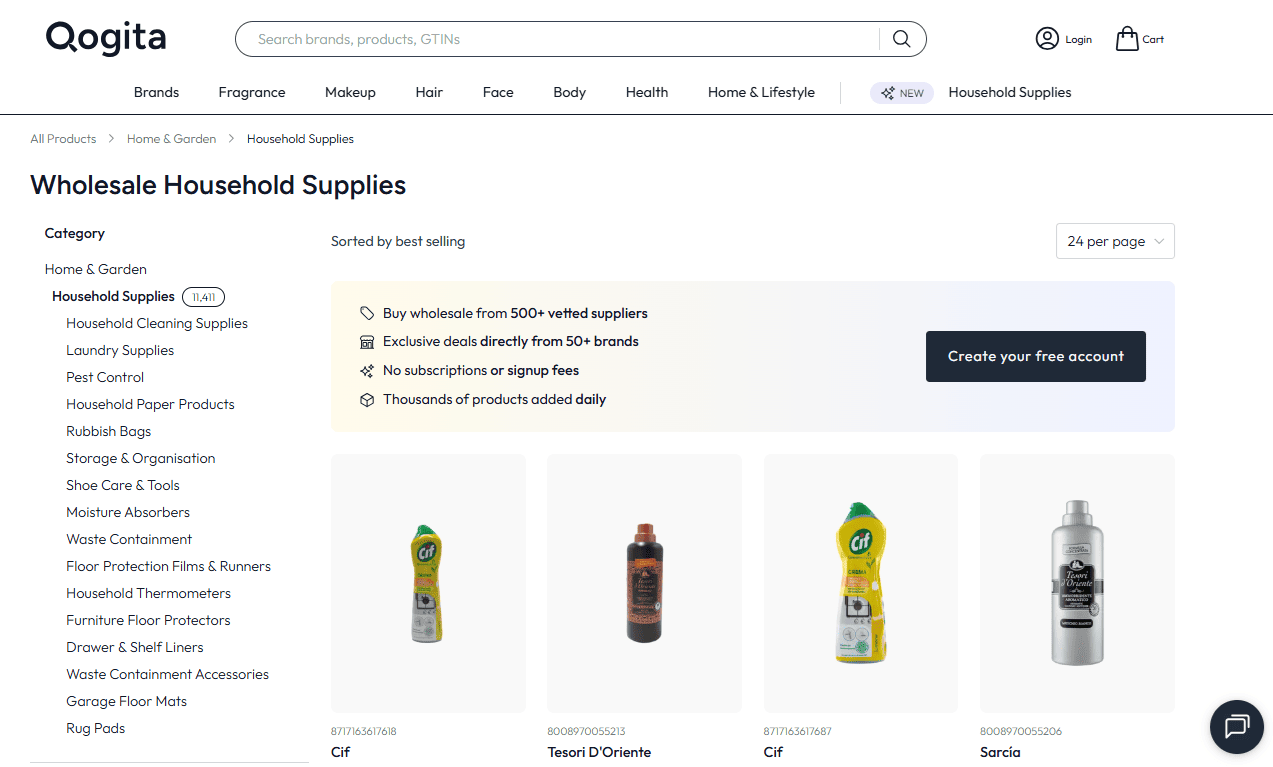
The wholesale marketplace model provides a simple solution for sourcing cleaning and hygiene stock. These online platforms are highly effective for retailers who need diverse inventory and efficient logistics without managing dozens of individual supplier accounts.
For example, Qogita acts as a central hub specializing in the European health, beauty, and household market. It solves many traditional wholesale pain points by consolidating the catalogs and pricing of over 500 vetted European suppliers onto a single website. This makes it a powerful tool for buying cleaning products in bulk from various global brands in one go.
Qogita offers retailers a low Minimum Order Value, usually around €300. This flexibility allows you to easily buy a wide variety of multi-surface sprays, laundry detergents, and specialty bulk cleaning supplies from multiple sources in a single checkout. This strategy minimizes your inventory risk and helps you optimize your cash flow.
Qogita also provides a unified invoicing system and manages the complex, multi-supplier logistics. This significantly cuts down on administrative time and costs for the retailer.
Phase 3: Vetting Suppliers and Quality Control

Once you have a list of potential partners, you must verify that they are reliable. Selling bulk cleaning products involves handling chemicals, so you cannot afford to work with low-quality suppliers.
Authenticity and Business Checks
The first step is ensuring your wholesale cleaning supplies distributors are legitimate. Counterfeit household goods are a growing problem. According to reports, authorities seized over 112 million counterfeit items worth roughly €3.8 billion in 2024. This shows why verifying your source is important to protecting your customers and your reputation.
For major brands like Domestos or Fairy, always ask for proof of stock or professional references.
- Check their VAT registration number and business address.
- Search for online reviews from other retailers to see if they have a history of late deliveries.
- Confirm that they specialize in the wholesale distribution of cleaning products to ensure they understand the handling requirements needed for these goods.
Testing Lead Times and Reliability
A supplier might have the best prices, but if their shipping takes three weeks, your shelves will stay empty. Here’s what you need to do:
- Place a small test order of bulk cleaning supplies before committing to a full pallet.
- Track how long it takes from payment to delivery.
- Observe the communication style. A good supplier answers questions quickly and provides tracking numbers without being asked.
The Sampling Protocol - Don’t Put All Your Eggs in One Basket
Never buy a new product in bulk without seeing it first. Even for household cleaning products wholesale, packaging and formula consistency matter.
- Packaging Check: Ensure the bottles do not leak during transit and the spray triggers work smoothly.
- Label Accuracy: Check that all safety warnings and ingredients are clearly printed in the correct language.
- Formula Test: If you are buying unbranded or "white label" bulk cleaning liquids, test them yourself. A weak formula will lead to customer complaints and returns.
Phase 4: Navigating Legal Documents and Compliance

Selling bulk cleaning products involves a lot of legal challenges and duties. Because these products contain chemicals, you must follow strict safety laws. In 2026, the rules for the UK and EU will have become even more detailed to protect the environment and public health.
UK and EU Detergent Regulations
As of March 2026, the European Union has implemented Regulation (EU) 2026/405. This new law replaces older rules and introduces much stricter standards for anyone selling in the EU.
- Digital Product Passport (DPP): Every detergent must now have a digital passport. This is a QR code on the label that links to a full list of ingredients and sustainability data.
- Biodegradability: New rules require surfactants to have a biodegradation rate of at least 60% within 28 days.
- Microbial Products: For the first time, probiotic cleaners containing live bacteria are officially regulated to ensure they are non-pathogenic.
Understanding the Safety Data Sheets (SDS)
An SDS is a 16-section document that explains exactly how to handle a chemical safely. As a retailer, you are legally required to provide these to your professional customers.
- The 2026 Update: In the UK, all SDS documents must now reflect the latest hazard classifications listed in the GB Mandatory Classification and Labelling (MCL) list.
- Retailer Duty: Even if you don't make the chemicals, you must ensure the SDS provided by your wholesale cleaning supplies distributors is the most recent version.
Labeling and UFI Codes
Labels for cleaning products wholesale must follow the Classification, Labelling, and Packaging (CLP) rules.
- Unique Formula Identifier (UFI): This is a 16-character code (e.g., YV9K-3J9A-G209-C2T7) found on the label of hazardous mixtures. It helps poison centers identify the exact chemical formula during an emergency.
- Pictograms: Every hazardous product must display standardized warning symbols, such as the "exclamation mark" for skin irritation or the "flame" for flammable liquids.
- Language Requirements: If you are buying cleaning products in bulk to sell in different countries, the label must be in the local language of that region.
UK REACH and Post-Brexit Compliance
In Great Britain (England, Scotland, and Wales), you must follow UK REACH. This is the UK's version of the EU's chemical registration system.
- Importing from the EU: If you are a UK retailer importing bulk cleaning supplies from Europe, you may be considered an importer under the law. This brings extra duties to register the chemicals with the Health and Safety Executive (HSE).
Note that the UK government has set a major compliance deadline for October 2026 for registering the most hazardous substances.
Phase 5: Inventory Management and Operations
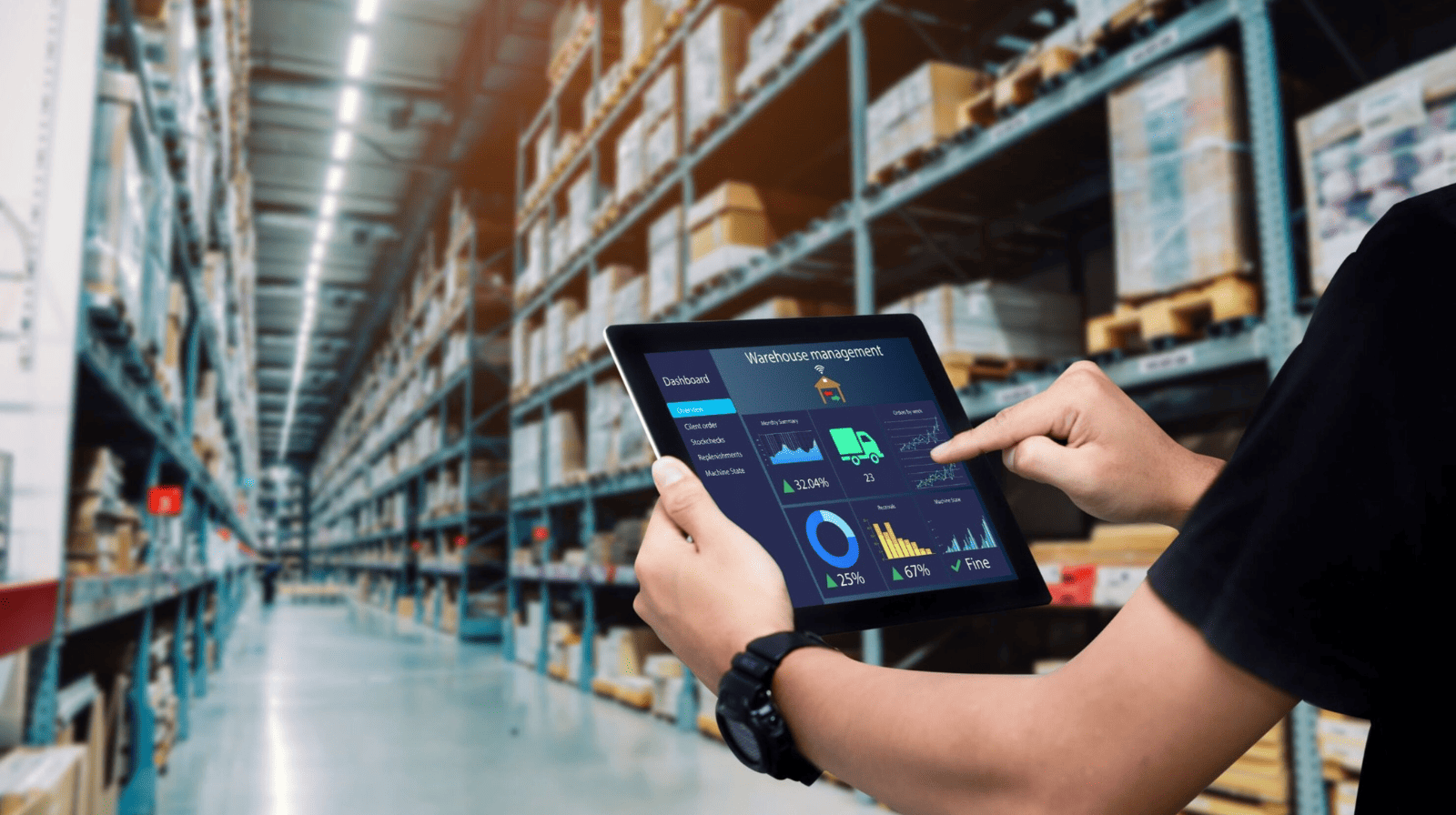
Managing bulk cleaning supplies isn't just about finding a big room. You are dealing with heavy liquids and chemicals that require specific care. Getting your operations right prevents waste and keeps your business safe.
Safe Warehouse Management
Cleaning chemicals can be very dangerous if you store them incorrectly. Safety experts note that mixing incompatible products, such as bleach and ammonia, can produce toxic chlorine gas.
- Separate Your Stock: Never store acidic cleaners near alkaline ones. If they leak and mix, they create toxic gas. It sounds like science fiction, but it is a real risk in professional storage.
- Use Spill Trays: Place your cleaning products on secondary containment pallets. These plastic trays catch leaks before they reach the floor or other stock.
- Control the Climate: High heat can cause plastic bottles to bloat or chemicals to lose their strength. Keep your storage area cool, dry, and well-ventilated.
The FIFO Method (First-In, First-Out)
Liquid cleaners actually have a shelf life. Over time, formulas can separate or lose their effectiveness. To manage this, use the FIFO method.
Always place your newest wholesale cleaning supplies at the back of the shelf. This forces your team to ship out the older stock first. Regularly check your bulk cleaning supplies wholesale for faded labels or changes in liquid color. Most products are at their best if sold within 12 to 24 months.
Using Inventory Software
Tracking hundreds of bottles with a pen and paper leads to mistakes. In 2026, many retailers use software to automate the heavy lifting.
- Set Reorder Points: Tools like Zoho Inventory or Odoo can alert you when your stock hits a specific level. If you have only 40 bottles of glass cleaner left, the system tells you it's time to reorder.
- Batch Tracking: This is vital for safety. If a manufacturer recalls a specific batch of household cleaning products wholesale, your software identifies exactly which bottles are affected.
- Reduce Overstock: Retailers using automated tracking in 2026 report up to 30% less overstock. This means you only buy cleaning products in bulk when you actually need them, keeping your cash flow healthy.
The 4 Common Mistakes to Avoid in Bulk Buying
Even seasoned retailers can slip up when they bulk buy cleaning products. These errors might seem small at first, but they can quickly drain your bank account or lead to legal trouble.
Here are the most common traps you should watch out for to keep your business running smoothly:
Falling for the Lowest Price Trap
It is tempting to grab the cheapest wholesale cleaning supplies you find, but this often backfires. A rock-bottom price usually means a low concentration of active ingredients. You might pay 20% less for a bargain floor cleaner, but if your customers have to use twice as much to get a decent result, they won't come back for a second bottle.
This is a major concern in 2026, as industry data shows that nearly 39% of trade professionals are now absorbing rising costs rather than passing them to customers.
This makes the cost-per-use much more important than the initial price-per-bottle. Always calculate how far the product actually goes before you commit to a massive order.
Overestimating Your Warehouse Storage
Buying a full pallet of bulk cleaning supplies to save an extra 5% sounds like a win until it actually arrives at your door. If you don't have a climate-controlled, ventilated space, those products become a serious liability.
Like I said before, cleaning chemicals are heavy and can leak under pressure if they are stacked incorrectly or too high. Storing them in a cramped, hot room can cause plastic bottles to bloat or chemicals to degrade over time.
So before you buy cleaning products in bulk, measure your shelving and make sure you have enough room for secondary containment, like spill trays. These simple tools prevent a single leaky bottle from becoming a warehouse-wide disaster that ruins your entire inventory.
Ignoring the Expiration Dates
Many people assume that cleaning chemicals last forever, but that simply isn't true. Bleach, for example, is a powerhouse cleaner that starts losing its strength after just six months once opened. Selling dead stock that doesn't clean effectively will quickly ruin your store's reputation and lead to customer complaints.
Inventory mismanagement, including expired goods and stockouts, costs retailers over $1.7 trillion globally each year. To avoid this, you should use the FIFO (First-In, First-Out) method as mentioned above. Label your boxes with the arrival date and always sell the oldest household cleaning product first.
Skipping the Documentation Check
If you buy cleaning products wholesale without getting the proper Safety Data Sheets (SDS), you are asking for a heavy fine during a surprise audit. You are legally required to have an updated SDS for every chemical you store for insurance and health safety reasons.
Counterfeit goods also pose a big risk so avoid suppliers who forget to send documentation or can't prove their stock is authentic.
Professional wholesale platforms like Qogita help you with this by consolidating your invoices and compliance documents in one place, so you don't have to chase individual manufacturers for missing paperwork.
You can learn more about identifying and preventing supplier fraud in our guide.
Conclusion
Ultimately, running a successful retail business comes down to having great supplier relationships. By implementing strong inventory protocols and regularly vetting your sources, you build a stable and reliable foundation for your products.
Platforms like Qogita can help you here by connecting you with trusted suppliers, making it much easier to bulk buy cleaning products with confidence. This allows you to focus on scaling your store and serving your customers, rather than worrying about compliance or sourcing mistakes.
Bulk Buy Cleaning Products FAQs
How to bulk buy cleaning products?
Start by identifying your high-turnover items and setting a clear budget for your initial stock. Once you have your product list, you can source through local distributors, attend trade shows like The Cleaning Show, or use modern B2B marketplaces to compare prices and consolidate your orders.
What are the best places to buy cleaning supplies in bulk?
The best options include specialized UK distributors like Jangro and Rayburn Trading for traditional sourcing. For a more modern approach, digital marketplaces like Qogita are excellent because they vet global suppliers and handle the complex logistics and invoicing for you in one place.
Is buying cleaning products in bulk worth it?
Yes, it significantly lowers your cost-per-unit and protects your business against sudden price hikes or supply chain shortages. You also get reduced shipping costs and ensure you always have enough stock on hand to meet customer demand during peak seasons.
Do I need a special license to buy cleaning products in bulk?
You generally do not need a specific license to purchase these items, but you must have a registered business account with most wholesalers. However, you are legally responsible for following COSHH and REACH regulations regarding the safe storage and handling of any hazardous chemicals in your inventory.
What is the difference between household and commercial cleaning products?
Commercial products are highly concentrated and designed for heavy-duty use in industrial settings, requiring dilution before they are safe to use. Household products are typically ready-to-use, with milder formulas and consumer-friendly packaging meant for daily home maintenance.