
Did you know the global skincare market is projected to reach over $130 billion in 2026? With more people focusing on skin health than ever before, buying wholesale skincare is a massive opportunity for your business.
However, this industry moves pretty fast. Between viral TikTok products and shifting 2026 cosmetic trends, staying ahead requires a solid strategy.
In this guide, we will break down exactly how to buy skincare products in bulk to maximize your margins. We will cover everything from finding the best skincare wholesale suppliers to managing logistics.
Why Buy Skincare Wholesale?
Buying skincare wholesale is one of the most effective ways to scale your beauty business. Whether you run a physical boutique, a spa, or an e-commerce shop, sourcing in bulk allows you to stay competitive and keep your shelves stocked with high-demand items.
Here are the primary benefits of choosing this route:
- Lower cost per unit: Purchasing larger quantities reduces the price per item, directly increasing your bottom line.
- High profit margins: With a lower acquisition cost, you have more flexibility in your pricing strategy to drive revenue.
- Wide product choice: Wholesale platforms offer access to everything from Korean skincare wholesale to organic skincare, all in one place.
- Meeting demand and market trends: Buying in bulk confirms you have enough inventory to satisfy customers when a specific product goes viral (which happens quite a lot these days, thanks to social media).
- Consistent supply: Establishing a relationship with a supplier helps prevent "out of stock" messages that can drive customers to your competitors.
From small startups to established salons, anyone looking to grow should consider bulk buying for resale to stay ahead in this busy market.
How to Buy Skincare Wholesale
Sourcing products for your business is a strategic move that requires a clear plan. In a market where moisturizers alone account for over 24% of product share, knowing exactly what to buy and from whom can be the difference between a sold-out shelf and dead stock.
Here is how to navigate the process step-by-step.
1. Choose a Trusted Online Marketplace
The first step in buying wholesale skincare is finding a legitimate supplier. In a market where high-demand brands are often targeted by counterfeiters, choosing a trusted partner is non-negotiable.
Reports show that around 20% to 30% of beauty consumers in some regions have reported irritation from unsafe, counterfeit products. This highlights why you need a platform that can scale with you while guaranteeing product safety.
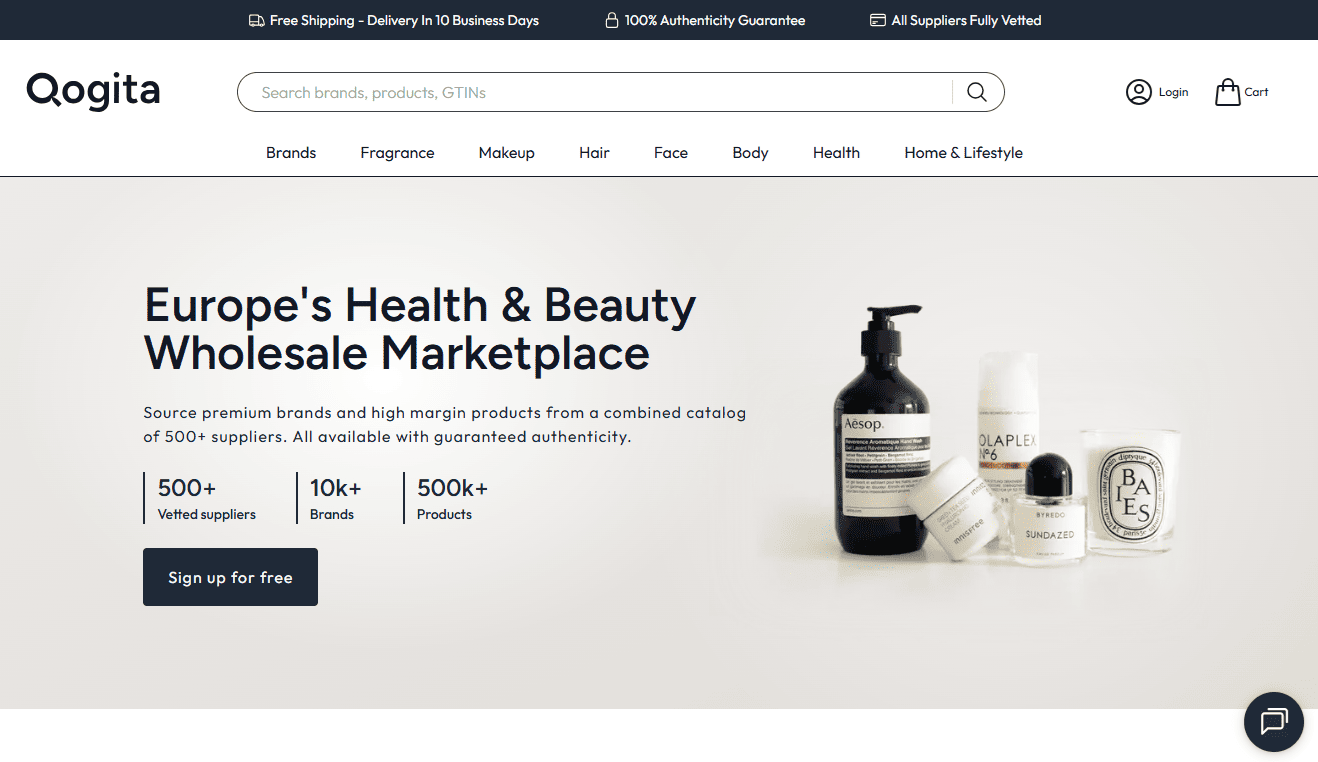
At Qogita, we understand that authenticity is everything. We follow a rigorous vetting process to ensure wholesale products are authentic, so you never have to worry about selling fake products. Through our platform, you also get access to globally recognized brands that are commonly found in major retail chains.
2. Look for Supplier Benefits

When comparing the best skincare wholesale suppliers, consider the additional value they offer beyond the products themselves.
High Minimum Order Quantities (MOQs) are a common hurdle in the industry. For example, a manufacturer might require you to buy 2,500 units of a single serum at £10 each. That is £25,000 of your working capital locked in one product.
If that item doesn’t sell as quickly as expected, that money is effectively frozen. It is preventing you from investing in marketing or other trending inventory.
For many small businesses, this inventory lockup is a big risk. Beyond the initial cost, holding large amounts of stock leads to extra expenses, such as warehouse storage fees and the risk of products expiring before they are sold.
Qogita changes this by offering a more flexible model with low Minimum Order Volumes (MOVs). Instead of forcing you to buy thousands of a single item, our platform allows you to source a variety of skincare wholesale products with a much lower entry point, as low as €300 per supplier.
This means you can test five different brands with the same budget others might spend on just one.
3. Consider Current Trends and Product Variety

Imagine selling a lipstick that goes viral on TikTok for two weeks. You sleep at night and in the morning... poof! The trend is gone. Suddenly, a new face serum is taking over the internet.
Bottom line: The skincare world moves incredibly fast. What is popular today may be replaced by a new holy grail ingredient tomorrow. So you must plan your stock months in advance.
For instance, the global skincare market is projected to reach approximately $190 billion in 2026. A major driver of this growth is the "skin-streaming" trend. This is where consumers move away from 10-step routines in favor of 3 or 4 high-quality, multifunctional products. If you only stock single-purpose serums, you might miss out on the 2026 demand for all-in-one barrier repair creams.
It is also important that your supplier offers a wide variety of products. Your customers might want a mix of everyday essentials and luxury skincare wholesale items. They may also look for the latest in Korean skincare wholesale, which continues to dominate global exports.
Lastly, don't forget the impact of seasonal wholesale beauty products. Statistics show that skincare product searches spike in peak months like November and December. These numbers often drop by over 50% in the late winter.
In the summer, your wholesale skincare orders should lean toward sun protection and hydration. In the winter, you should pivot toward heavier moisturizers and holiday gift sets. Partnering with a supplier who offers a wide catalogue allows you to shift your inventory to match these cycles.
4. Consider Storage Requirements

As you know, skincare products are sensitive to their environment. When you bulk-buy skincare, you must have a specific plan for where those items will live.
Research shows that 10% of beauty inventory is lost annually due to damage or expiration. High temperatures can cause active ingredients like Vitamin C or Retinol to oxidize. This can turn a premium serum orange or brown, making it useless before it even reaches a customer.
Before placing an order, check whether any items, such as organic skincare, require a cool, dark place or refrigeration.
Packaging also plays a huge role in successful storage. In fact, pumps are the leading dispensing system in the airless packaging market, capturing nearly 48% of market share because they help preserve formulas by reducing air exposure and contamination.
Choosing products with opaque or UV-protected glass can extend the shelf life of your inventory and protect your investment from spoiling.
5. Ensure Your Business is Registered

You do not need any specific beauty license to sell skincare in the UK, but you must be a registered business to trade legally. Whether you choose to be a sole trader or a limited company, your business must comply with the UK Cosmetic Products Regulation.
This matters even more in 2026 because enforcement has tightened. The Office for Product Safety and Standards has increased oversight, and penalties for non-compliance have become more serious. For instance, failing to properly notify authorities about a cosmetic product can result in significant fines and, in some cases, a short custodial sentence.
Before you place your first wholesale skincare order in the UK, you must understand the role of the "Responsible Person" (RP). Every product sold in Great Britain must have an RP based in the UK that guarantees the item is safe and properly labeled.
If you are reselling established brands, the manufacturer or original importer usually handles this. However, if you are importing products from outside the UK yourself, you take on these legal duties.
You also need to ensure that every product is registered on the Submit Cosmetic Product Notification (SCPN) portal. Even if you’re not the manufacturer, confirming that your wholesale skincare stock is compliant helps protect you from legal issues later on.
What to Avoid when Buying Wholesale Skincare
Even experienced retailers can fall prey to common supplier scams that drain their budgets or damage their brand’s reputation. To keep your business running smoothly, here are the main pitfalls to watch out for:
- Untrustworthy suppliers: Always research a new partner before sending money. Look for verified reviews and clear business credentials. If a supplier lacks transparency about their sourcing or refuses to provide batch codes, it is a sign to walk away.
- Expired products: In the skincare world, sometimes cheap means old. So, always verify the manufacturing and expiry dates. Selling expired items is not just a waste of money; it can cause serious skin reactions for your customers.
- Poor storage conditions: Avoid buying from wholesalers who do not prioritize climate control. If products have been sitting in a hot, humid warehouse, their active ingredients may have already broken down, leaving you with useless stock.
- Unsafe ingredients: Avoid products that contain banned substances or lack a full ingredient list. For example, in 2026, the UK and EU have strictly banned microplastics and specific UV filters like Enzacamene. Selling non-compliant stock can lead to heavy fines and product recalls. You can find more about EU cosmetic regulations here.
Conclusion
Sourcing wholesale skincare products comes down to smart supplier choices, good timing, and stocking high-demand items. Retailers who stay consistent with these basics usually see better sell-through and less dead stock.
A wholesale platform like Qogita makes the process easier by giving you access to 500+ verified suppliers, flexible order sizes, and a wide product range that keeps up with demand shifts.
If you want to expand your inventory further, our guide on how to buy makeup wholesale offers more expert advice for sourcing color cosmetics.
Explore our full range of authentic products to get started: